Monday, May 3, 2010

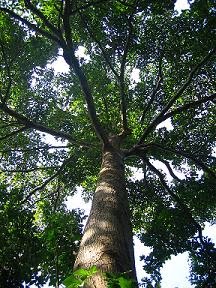
ANTIPOLO the tree and not the capital of RIZAL.

Yes, Antipolo City, the capital of Rizal got it's name from the Antipolo tree decades ago. Apparently, the city had an abundant supply of Antipolo trees from it's original forest, hence the name Antipolo City.
Fortunately, the Antipolo tree is endemic to the Philippines, however, it is indigenous to other cities within the country such as Calumpit, Bulacan being it's neighbor. Kalumpit is also a native tree, which I already discussed earlier.

Going back, the Antipolo tree belongs to the family MORACEAE and genus Artocarpus. It's scientific name is Artocarpus blancoi and is very much related to the popular jackfruit/Nangka/Langka (Artocarpus heterophyllus). Similarly, the seeds of the Antipolo can also be cooked or boiled or eaten raw by birds and land animals. I am not sure if the flesh is also edible. The wood of this tree is said to be of good quality and can be used to make furniture. The tree stands to about 30-40 meters in height and can reach a diameter of about 1-2 meters.
An added information to Antipolo is that according to wikipedia, "The name Artocarpus is derived from the Greek words artos (=bread) and karpos (=fruit)." Thus on some edible species, this breadfruit is eaten as a staple diet. On another note, wikipedia also mentioned that, "All Artocarpus species are laticiferous trees or shrubs whose leaves, twigs and the stem can produce a milky sap."

Sunday, May 2, 2010

Bungang-Jolo, popularly known as Manila Palm

BUNGANG-JOLO
Family: PALMAE / ARECACEAE

Scientific name: Veitchia Merrillii (synonymous to Adonidia Merrillii)
Other common names: Manila Palm, Christmas Palm
Uses: Landscaping / Ornamental palm tree

Origin: PHILIPPINES
*solitary erect palm, good for lanscaping small areas

Sunday, April 11, 2010

SURVIVOR of the El NINO CHALLENGE!

GRAND PRIZE WINNER
SURVIVOR of the EL NINO CHALLENGE 2010!

(drumroll pleaseeeee..................)

BANI (Pongamia Pinnata)

A LESSON LEARNED.

The months of January to February of this year didn't give us enough rain. El Nino still scorches everything under the sun. It is hot, dry and humid at times. Everything and everyone is getting restless. When will the rains come???

I see mortalities from the seedlings that I have planted since last year and even from the year before that. It's partly my fault since I have planted up until end of November or was it mid December of last year, expecting rains will come until February of this year 2010. An added factor is because there are native species that are hardier during long summer months than some that just cannot take the extreme weather and climate.

I can't believe that most of my yakal trees that are about 1 meter high and already established under the protected shade of other neighboring trees are still dying.

Life is definitely full of unexpected things. "You win some and you loose some". Just thinking on how can I avoid this problem in the future........Maybe I'd plant more of the native species that are found in my area. These trees are adapted to the soil, weather and other environs that is
present in it's native habitat. Chances are there is a greater survival rate that these trees will reach its maturity and full potential.
photos from left to right: 1) aunasin; 2) acle; 3) bitanghol; 4) bignai-pugo; 5) bungang-ipod; 6) paitan; 7) tabon-tabon; 8) yakal-saplungan

Sunday, April 4, 2010

KALUMPIT (Terminalia Microcarpa)

When I was starting to look for native trees, this tree known as Kalumpit (Terminalia microcarpa) was one of my first discovery and it is one of my favorite. Who could miss this magnificent tree towering to about 25-30 meters in height and spreading out its canopy to about 15 meters in radius. Even up close and personal with this tree, the bole is about 1-2 meters in diameter and showing off its large and high buttress. It is also deciduous, meaning it sheds off its leaves during summer and grows it back come rainy season. When the fruiting season comes, oftentimes in sync with the start of the rainy season, numerous small oval shaped somewhat velvety purple to dark violet, almost black fruits carpet the ground below signifying an abundant harvest that can be made into jam or juice or delicacies maybe, which I am not familiar of. Although I haven't tasted this so called jam, I distinctly remember a sweet and sour sort of subacid taste similar to that of bignay and other berry type fruits which contain alcohol or wine taste.

Belonging to the family COMBRETACEAE, Terminalia means having leaves borne on its terminal brances, while Microcarpa means having a small fruit as supposed to other species from the same genus terminalia. If you are familiar with the tree Talisai, then i'd say that they are cousins. Another note is that Kalumpit belongs to the molave type of forest.