Tuesday, July 7, 2009

Wanna Swap Seedlings?

If you are a hobbyist, environmentalist, forester, horticulturist, agriculturist, plant enthusiast, in the ornamental plant business, a concerned citizen of the Philippines or from another country, then you are welcome to join and contribute.

Whether we are from the city or the province, trees and plants are part of our lives. We sometimes take them for granted, but we know that they are there. One particular common and native plant or tree from a certain region or place can be a rare find from another. Take for example the popular Benguet Pine (Pinus kesia) trees from Baguio and the Benguet mountain provinces, they are commonly found in high and cool altitude, while the Nipa (Nypha fruticans) Palm tree are usually found along coastal areas and estuarines. They differ greatly in habitat, however, if you simulate their environment and cultural requirements, then they might thrive in whatever place they are in.

Oftentimes, we encounter curious trees or plants that interests us from our vacation trips. Sometimes we are lucky to get seeds or wildlings and bring them back to our place to plant them. By doing this, we are unconsciously propagating and dispersing their species to another area. This is a responsibility that we should be aware of, because imported plants from different countries are also dispersed this way and oftentimes dominate vast expanse of land.

Fortunately, we can put this problem into our advantage if we work together. We can help preserve and conserve our own native trees by swapping. Our resources will be maximized. Help me protect plants and trees that are native to your region or province.

For more information, please leave your comments and suggestions here and I will get back to you the soonest.

Sunday, July 5, 2009

OPEN YOUR EYES TO OUR ENVIRONMENTAL PROBLEMS

Are you a concerned citizen of the Philippines? Are you aware of global warming or climate change? Do you see what is going on with our surroundings especially the environment? Do you see pollution and garbage everywhere? Have you felt the intense summer heat, even if it is not summer? Do yo smell the smog that our cars and vehicles are emitting? Do you have trouble sleeping due to the irritating sounds we hear late at night or early in the morning, due to inconsiderate neighbors and passing vehicles? Have you seen hunger from the faces of our very own countrymen? IF NOT, THEN OPEN YOUR EYES AND DO SOMETHING!

The problems we face now seem magnanimous. We ask ourselves, where do we start?.........The answer is that we start with ourselves. Change for the better is inevitable if we want to exist in this world, otherwise, there is no future for the succeeding generations.

Start with simple things like segregating your garbage. Separate organic matter (nabubulok) from inorganic matter (di nabubulok), like paper, fruit peelings, garden litter, leaves and tree branches from materials such as plastic, metal and glass bottles which cannot decompose easily, but may be recycled. Learn to compost the organic matter, which will be beneficial for your garden plants. Incorporate plants and trees in your backyard or garden space in order to minimize pollution in every aspect.

Please don't throw your trash in the streets or in the canals as they will find their way in our rivers and oceans. Please do not smoke or burn inorganic matter such as leaves, because this contributes to air pollution and the carbon in the atmosphere that traps the heat of the sun in our atmosphere. Please refrain yourself from using air-conditioning, aerosols, styrofoams, foams, refrigerants that use CFC (chloro-fluoro-carbon), because CFC's are the main reason why our ozone layer is depleting in the atmosphere. Please avoid using wood from illegal lumber, because our forests are fast disappearing. Please stop using chemical fertilizers, pesticides and insecticides, because not only are they harmful to us but they are especially harmful to our surroundings and to the wildlife.

Lastly, if all is NOT too late may GOD HAVE MERCY ON US!

Friday, July 3, 2009

AMUGIS SEEDLINGS FOR SALE.

Local Name: AMUGIS
Scientific Name: KOORDERSIODENDRON PINNATUM
Use: EDIBLE FRUIT (FAVORITE FOOD OF BATS)/ GOOD
LUMBER FOR FURNITURE
Character: LARGE TREE WITH HIGH BUTTRESS
ROOTS, USUALLY STRAIGHT BOLE, GOOD
SHADE TREE

Forest Type: MOLAVE FOREST
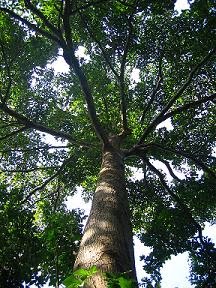
Photo: AMUGIS TREE IN FLOWER (MOTHER TREE)
Seedling Availability: SEEDLINGS WILL BE AVAILABLE
WITHIN 3-4MONTHS
Limited Stocks: ORDER NOW DUE TO LIMITED SUPPLY
Contact Details: 0917-8834691 - LOOK FOR RICO

Friday, June 5, 2009

LOCAL O IMPORTED?

Kung ako ang tatanungin, kahit may dugong Chinese ako mas pipiliin ko pa rin ang maging Pinoy kasi dito ako ipinanganak, namulat at lumaki. Pag nakakarinig tayo ng mga Pinoy abroad na pinaparangalan sa kanilang kagalingan at talento, namamayagpag ang ating mga dibdib at kalooban. Ipinagmamalaki natin ang mga Pinoy na sina Leah Salonga, Regine Velasquez, Allan Pineda Lindo or Apl.de.ap ng the Black Eyed Peas, Charice Pempengco, Jasmine Trias, Paeng Nepomuceno, Alex "The Lion" Pagulayan (2004 World Pool Champion), Irene Mora (first filipina NASA astronaut), Efren Bata Reyes, Manny "Pacman" Pacquiao at marami pang iba. Iilan lang sila sa mga ikinararangal natin na makilala ng mga dayuhan at magdala ng lahi na Filipino at galing sa bansang Pilipinas.

Sabihin na natin na may colonial mentality tayo at mahilig tayo bumili ng "imported" na mga bagay o pagkain galing sa ibang bansa, pero ibig sabihin ba nito ay mas maganda o kalidad ang gawa sa ibang bansa kesa sa gawang pinoy? Masasabi ba natin na mas maganda at mas matibay ba ang mga puno galing sa ibang bansa kesa sa mga puno na nangaling sa Pilipinas?

Tropical country ang bansang Pilipinas kaya mas marami tayong halaman at puno kung ikukumpara sa mga bansa na malalamig. Sa mga bansa na gaya ng Pilipinas na may tropical climate din, masasabi ko na may itatapat naman tayong mga puno na may kalidad din o higit pa na mas maganda. Bakit ba isinusulong ng gobyerno ang magtanim ng mga imported na mga puno sa reforestation projects tulad ng Mahogany, Gmelina, Acacia Sp., Eucalyptus Sp., Teak Sp. at iba pa gayong meron naman tayong mga native na puno at halaman na mga Philippine Mahogany, Bagras (native eucalyptus tree), Philippine Teak at marami pang puno na higit pang matibay at mabilis lumaki, dahil akma sila dito sa ating lupa at klima?

Ang sikat na brand na pabango na Channel No. 5 na kilala sa buong mundo ay gumagamit ng langis at essence na galing sa bulaklak ng puno ng Ilang-ilang na indigenous sa ating bansa.

Kung ako ang tatanungin, dito na ako sa sariling atin. Patronize our own. Isulong ang slogan na "Buy Filipino", "made in the Philippines" and "Only in the Philippines"!

RACE AGAINST TIME

A few years back, this Balobo tree stump used to be a tree that I visited so that I can collect seeds for propagation. When I passed by the same tree months ago, it was already cut down. It was evident that the lumber was going to be used as a construction material, since a house was being constructed or repaired.

Now, one majestic native tree is also going to be cut down and according to the owner, the wood is going to be used to replace the old door jambs of their house. I said to the owner, "Sana wag n'yo na lang ipaputol yung puno, kahit yung sanga na lang sana" please don't cut the tree, instead just cut it's brances so that the tree may live. She told me that the branch is of no use since it is soft and that the best lumber is the heartwood of the tree, because it is the hardest and most durable part.......... I will still try to persuade the owners not to cut the tree down.

Everywhere you go in the Philippines, trees are just being cut down. Whether coconut trees for coco lumber, mature trees or even young trees are felled to be used for commercial lumber, for private use, as charcoal or even just to clear a property. Most felled trees are not replaced with new seedlings. When every tree has been cut down, where will we get the basic things that we need?

Trees give us oxygen, shade from the scorching sun, nutrients for the soil, fruits and leaves to eat, shelter for birds and other living organisms, flowers to make perfumes and essential oils, natural purification for ground water, ingredients to make medicine, raw materials to make rubber, fiber to make baskets and twine and most especially wood to be used for construction purposes. The list goes on and on and still these resources are not being used to the fullest of their potential. When will we see what the trees real worth is, when they are endangered and extinct?