We often hear designers and architects associate modernism to simplicity, clean, uncluttered and maintenance free. This is what most of us want to achieve in this modern world because we want our lifestyle to reflect beauty, comfort and style minus the headaches. Concepts are made and formulated to meet demands and requirements, but no matter what the end result is everything should serve a purpose. Nothing should be put to chance otherwise all efforts will be wasted.
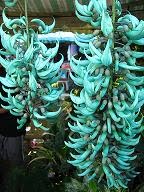
I wish that I can say the same about rainforestation. That I can just plant seedlings in rows and watch them grow their way into the garden of Eden that we envision them to be. It takes more than that because there is life in trees and plants and that we can never control nature, time or the elements. We often say that life is unfair. Well, life as we know it is certainly full of uncertainties. Unexpected things could happen to your seedlings/trees like for example your brother's pitbull ate your one and only germinating Manaring (lithocarpus sp.) seed, which you collected from a forest in Tagaytay. Or when the time that your jade vine was already making it's way up the fence that a sudden infestation of moth larvae gorged on the leaves that it was too late for you to take drastic measures to save it. There was even an instance when unexperienced you made some unforseen errors in handling and storing Tindalo seeds that when the time you got back from the trip and planted it, almost all of it perished due to fungus or bacteria. What a waste! In the end, you try to learn from these mistakes and hope to never ever do it again.
Enough about reminiscing the past because there is nothing to it. Nothing to bring it back I mean so might just face life head on. Like in a forest, life is teaming with species, one dependent on the other to form that symbiotic relationship or an ecosystem. Rainforestation is mimicking and bringing back that ecosystem. It is the closest thing that we can offer because we can never ever recreate the original virgin rainforest once it is destroyed. Diversity is the key. The weakness of one will be the strength of other species. I am talking about the layer upon layer of plant and tree species in one area. Try to adapt that concept and maybe then you'll agree with me that in rainforestation, more is more!
I wish that I can say the same about rainforestation. That I can just plant seedlings in rows and watch them grow their way into the garden of Eden that we envision them to be. It takes more than that because there is life in trees and plants and that we can never control nature, time or the elements. We often say that life is unfair. Well, life as we know it is certainly full of uncertainties. Unexpected things could happen to your seedlings/trees like for example your brother's pitbull ate your one and only germinating Manaring (lithocarpus sp.) seed, which you collected from a forest in Tagaytay. Or when the time that your jade vine was already making it's way up the fence that a sudden infestation of moth larvae gorged on the leaves that it was too late for you to take drastic measures to save it. There was even an instance when unexperienced you made some unforseen errors in handling and storing Tindalo seeds that when the time you got back from the trip and planted it, almost all of it perished due to fungus or bacteria. What a waste! In the end, you try to learn from these mistakes and hope to never ever do it again.
Enough about reminiscing the past because there is nothing to it. Nothing to bring it back I mean so might just face life head on. Like in a forest, life is teaming with species, one dependent on the other to form that symbiotic relationship or an ecosystem. Rainforestation is mimicking and bringing back that ecosystem. It is the closest thing that we can offer because we can never ever recreate the original virgin rainforest once it is destroyed. Diversity is the key. The weakness of one will be the strength of other species. I am talking about the layer upon layer of plant and tree species in one area. Try to adapt that concept and maybe then you'll agree with me that in rainforestation, more is more!